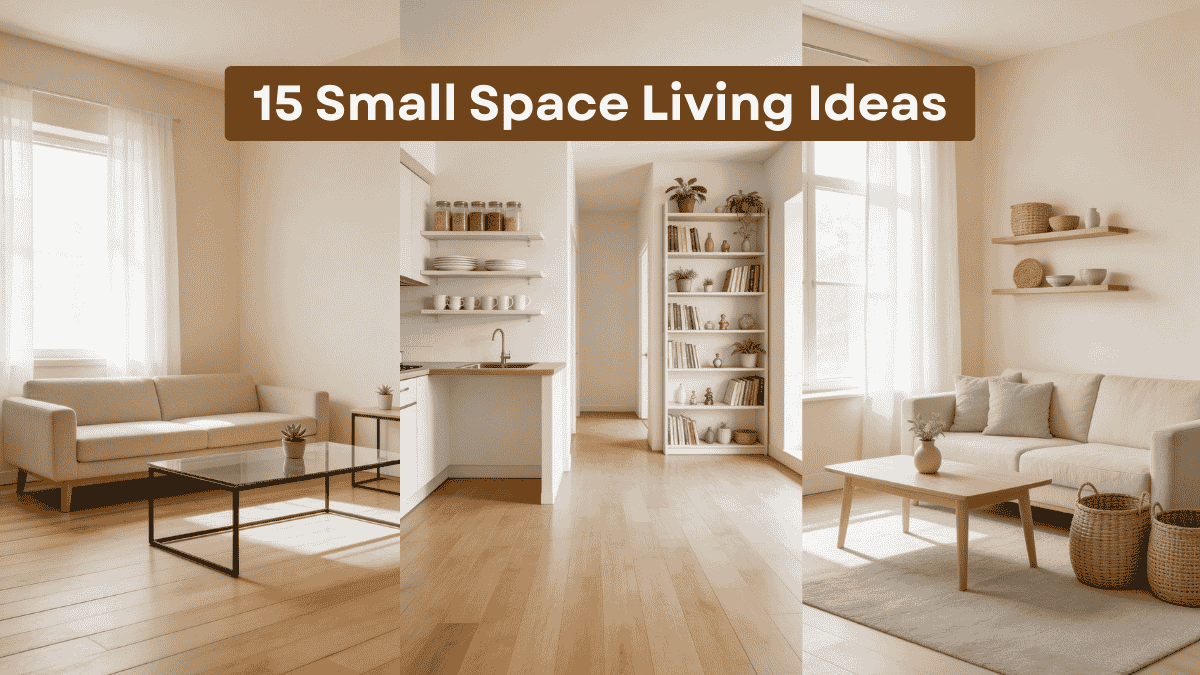
Small Space Living Ideas: Living in a smaller home can feel cozy and comfortable, but it can also bring everyday challenges. When space is limited, clutter builds quickly, storage becomes tricky, and rooms may start to feel cramped. Many people living in small homes are seeking practical solutions that help keep their homes organized without compromising on comfort or style.
The good news is that small homes can feel open, calm, and beautifully functional with a few thoughtful adjustments. You do not need a full renovation or expensive furniture to make a difference. Small design choices, clever storage solutions, and mindful organization can completely transform how your home feels.
In this guide, you will discover practical small home living ideas and tiny home living tips that help you use every corner wisely while creating a warm and welcoming space.
Table of Contents
1. Choose Furniture That Serves More Than One Purpose
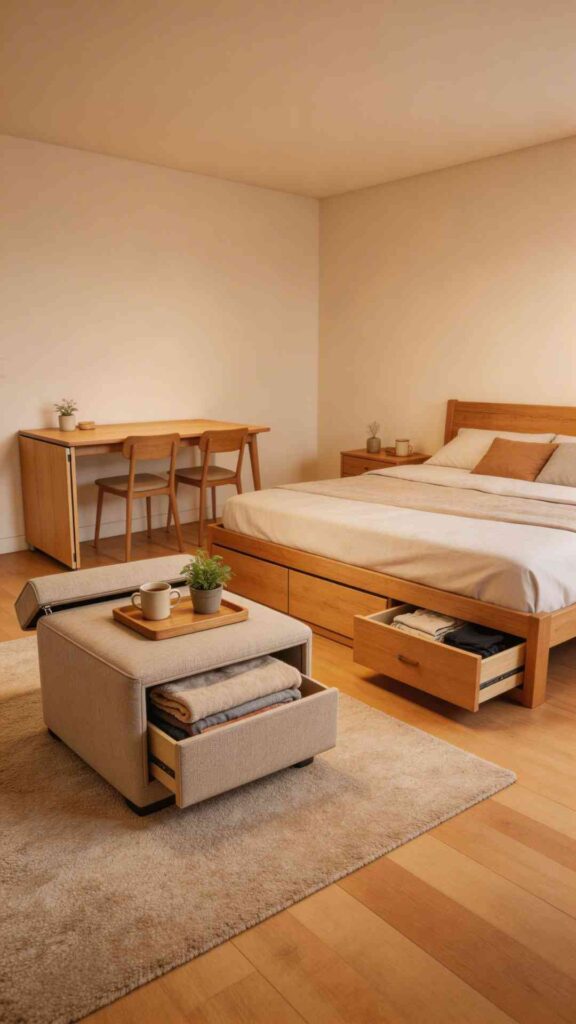
One of the simplest small space living ideas is choosing furniture that can serve multiple roles. When each item performs more than one function, you instantly free up space without sacrificing comfort.
A storage ottoman can hold blankets while acting as a coffee table. A bed with built in drawers can replace a bulky dresser. A dining table with foldable sides can expand when guests arrive and stay compact the rest of the time.
This approach is especially helpful in studio apartments or small homes where every piece of furniture needs to earn its place. The goal is not to crowd the room with clever items, but to choose a few well designed pieces that quietly solve several needs at once.
2. Use Vertical Space for Storage
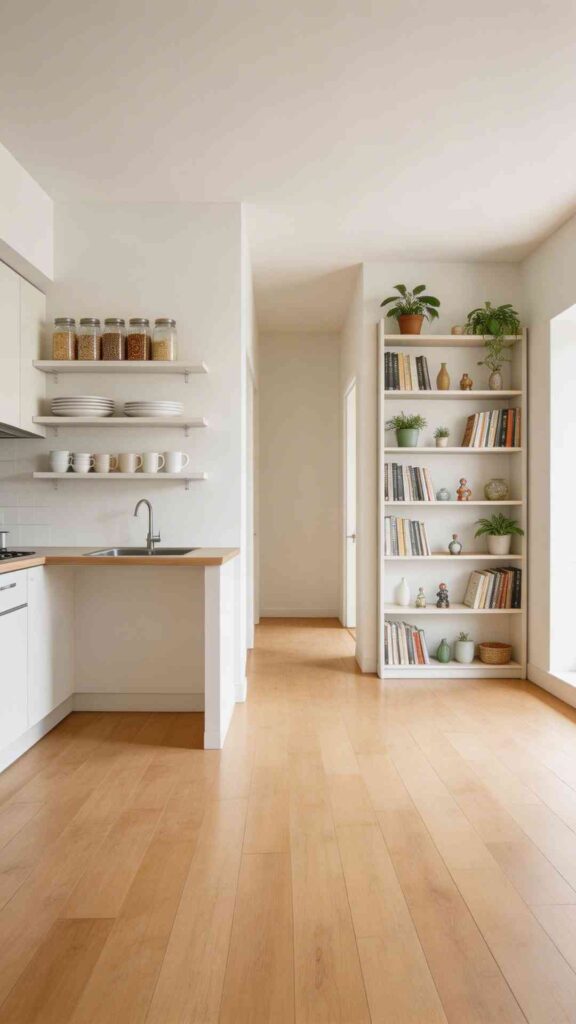
When floor space is limited, the walls become incredibly valuable. One of the most effective compact living ideas is to think vertically.
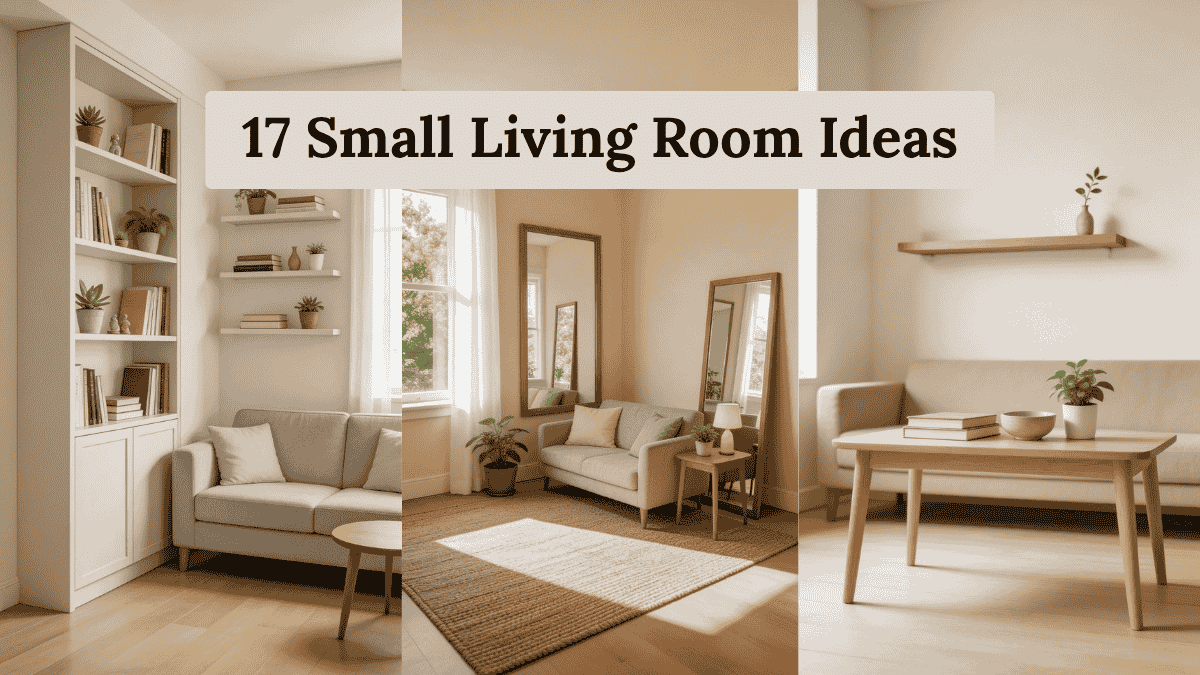
Floating shelves, tall bookcases, and wall mounted cabinets help store everyday items while keeping the floor open and easy to navigate. This makes rooms feel larger and more breathable.
For example, in a small kitchen you might install shelves above the counter for dishes and glass jars. In the living room, a tall shelving unit can hold books, plants, and decorative objects without spreading across the room. Using vertical storage allows you to maximize storage while maintaining a clean and uncluttered feel.
3. Create Clear Zones in Small Rooms
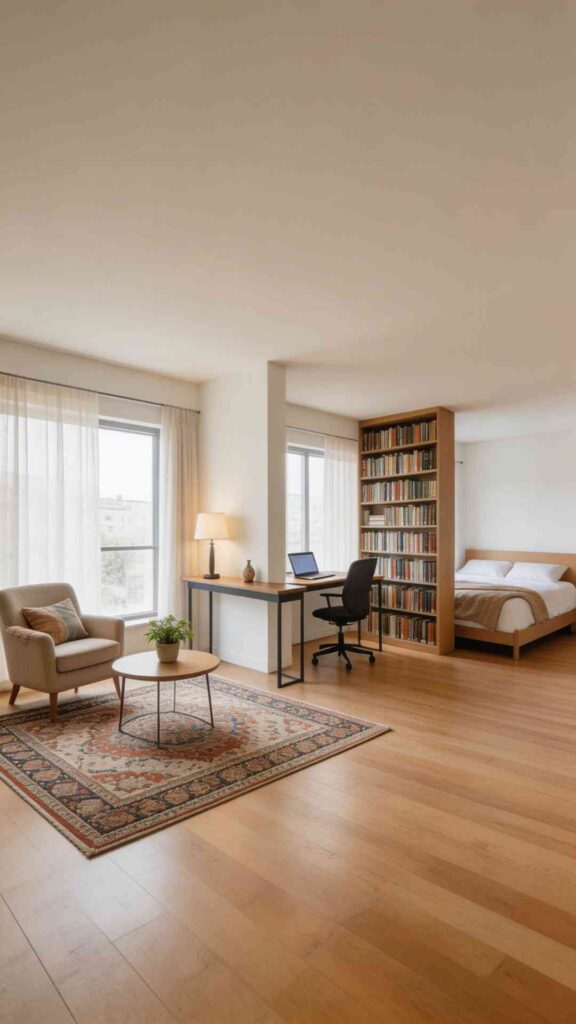
Even in a small apartment, defining different areas for daily activities makes the home feel more organized. One of the most overlooked tiny home living tips is simply creating clear zones.
A small rug can define a sitting area. A narrow console table can separate a workspace from the living area. A bookshelf can act as a subtle divider between a sleeping corner and the rest of the room.
These gentle boundaries give structure to the space without blocking light or movement. When rooms feel organized into purposeful zones, they automatically feel calmer and easier to live in.
Also See: 12 Modern Indoor Plant Decor Ideas for a Stylish Home
4. Choose Light Colors to Open the Room
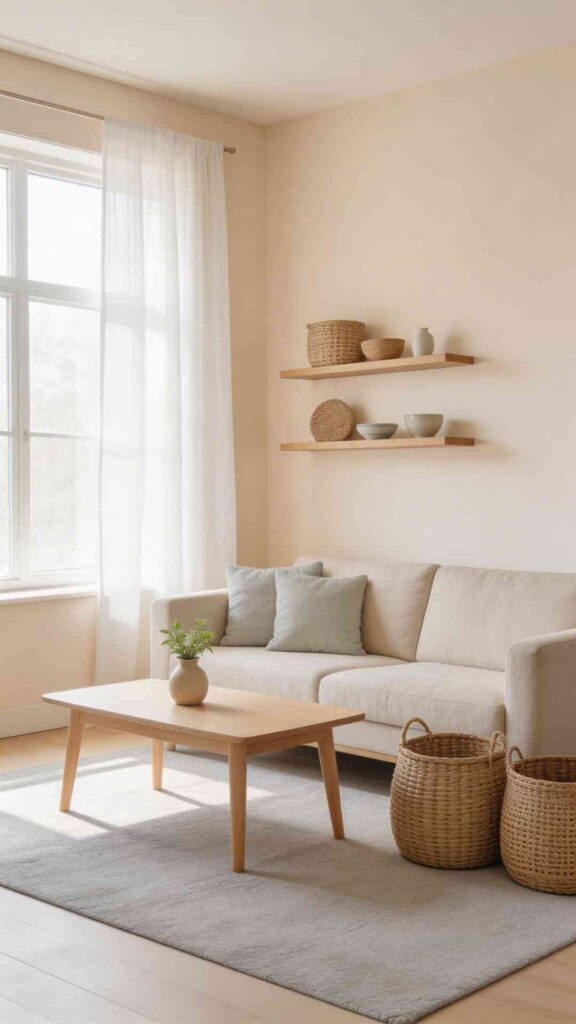
Color plays a powerful role in how spacious a room feels. Lighter tones reflect natural light and help create a sense of openness.
Soft whites, warm beige, pale gray, and gentle pastels work well in smaller homes. Walls painted in lighter shades create a seamless look that allows furniture and decor to blend naturally into the space.
This does not mean everything must be white. Adding texture through linen fabrics, wood tones, woven baskets, or ceramic pieces keeps the room interesting while still supporting the feeling of openness that maximizing small spaces requires.
5. Use Mirrors to Reflect Light and Space
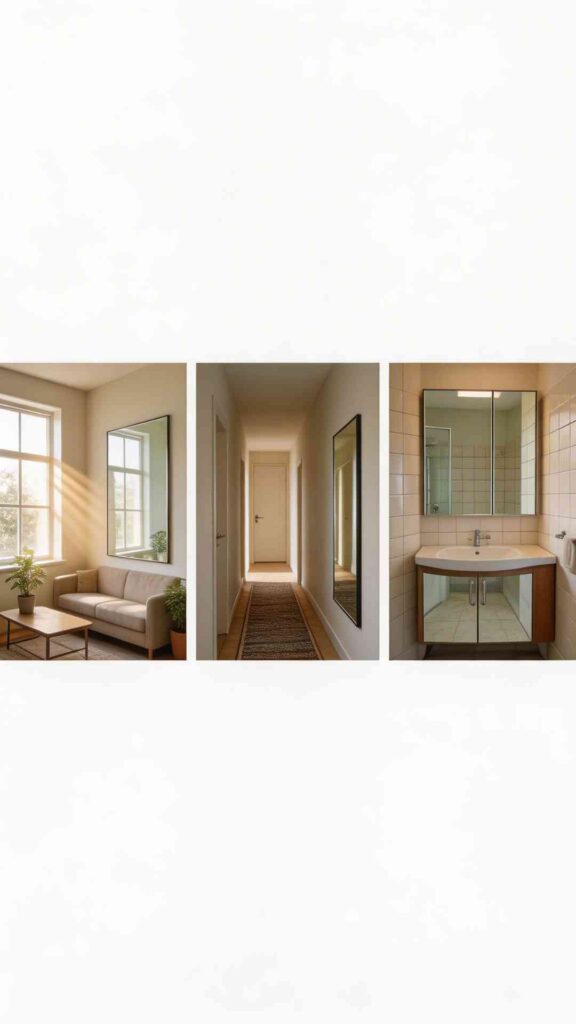
Mirrors are a simple but effective tool when working with smaller interiors. When placed thoughtfully, they reflect natural light and visually expand the room.
A large mirror opposite a window can brighten an entire living area. A slim mirror in a narrow hallway helps prevent the space from feeling closed in. Even mirrored cabinet doors in a small bathroom can create the impression of more depth.
This trick works because mirrors bounce light around the room while adding a sense of visual continuity. It is one of the easiest small home living ideas that delivers noticeable results without major changes.
6. Keep Surfaces Calm and Clutter Free
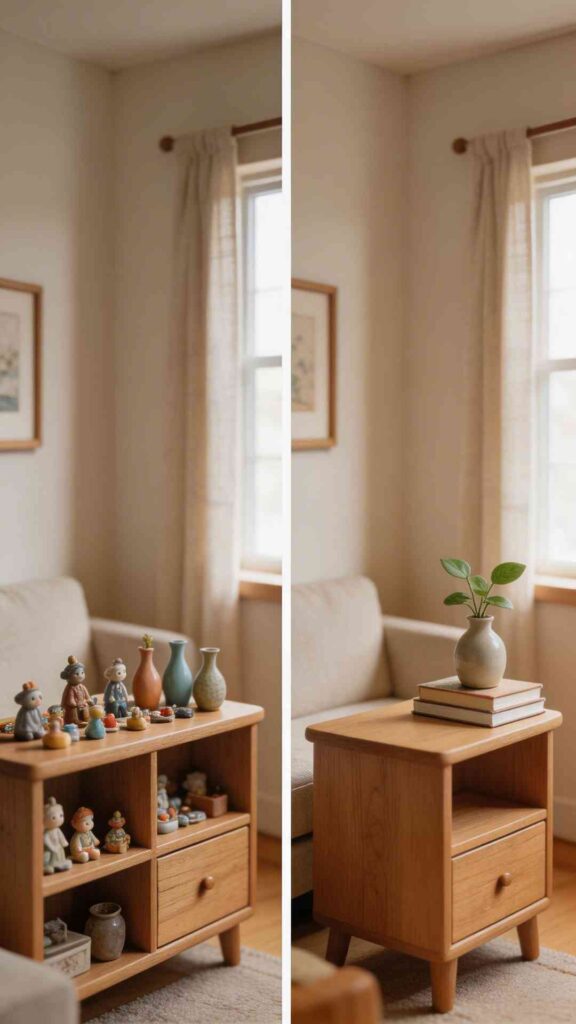
Small homes quickly feel crowded when every surface is filled with objects. One important habit in small space living ideas is keeping surfaces intentionally simple.
Instead of placing many small decorations on shelves and tables, try choosing only a few meaningful items. A ceramic vase, a stack of books, or a small plant often feels more calming than multiple decorative pieces.
Clearing surfaces also makes cleaning easier and keeps rooms visually quiet. The space begins to feel more open and relaxing, even if the actual size of the room has not changed.
7. Make Use of Corners
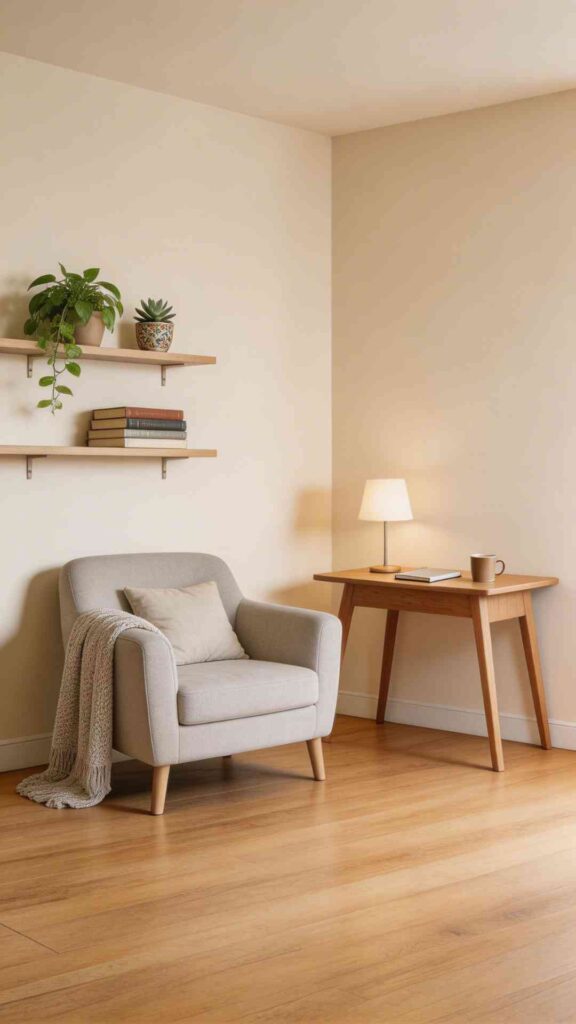
Corners are often ignored, yet they hold valuable potential in smaller homes. Turning these overlooked areas into functional spots is a smart way of maximizing small spaces.
A corner shelf can hold plants or books. A compact armchair can create a cozy reading nook. Even a small triangular desk can turn an unused corner into a productive workspace.
When corners are thoughtfully used, the room feels balanced and purposeful. It also helps distribute furniture more evenly so that the center of the room remains open and comfortable.
Also See: 12 Minimalist Home Office Ideas for a Clean Workspace
8. Choose Slim and Airy Furniture
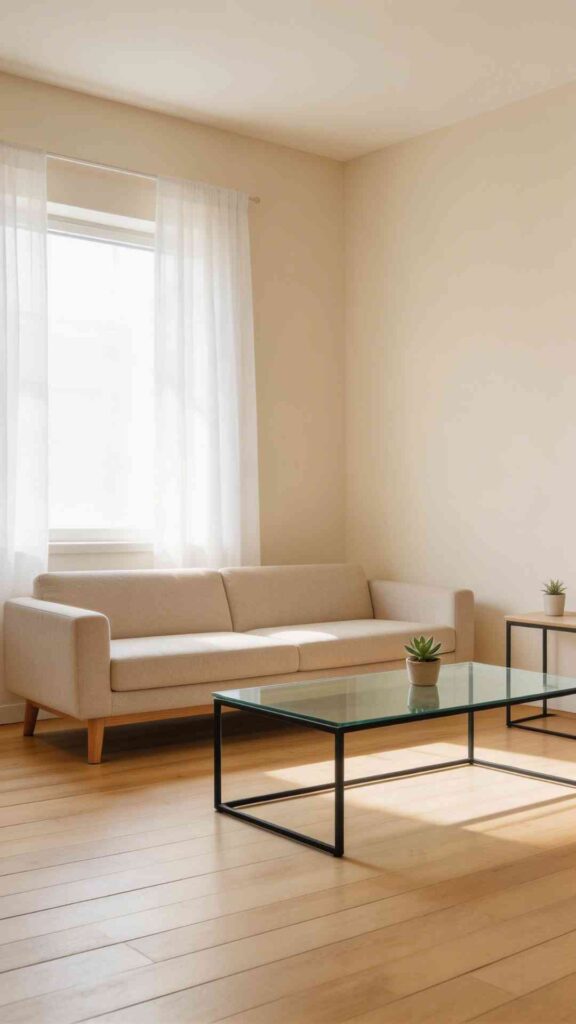
Large bulky furniture can overwhelm a smaller room. One helpful compact living idea is choosing furniture with lighter visual weight.
Pieces with slim legs, open bases, or glass surfaces help maintain a sense of openness. For example, a coffee table with a glass top allows light to pass through it, making the room feel less crowded.
Furniture that sits slightly off the floor also creates visible space underneath, which visually expands the room. These subtle design details quietly help smaller homes feel more spacious.
9. Hide Storage in Everyday Spaces
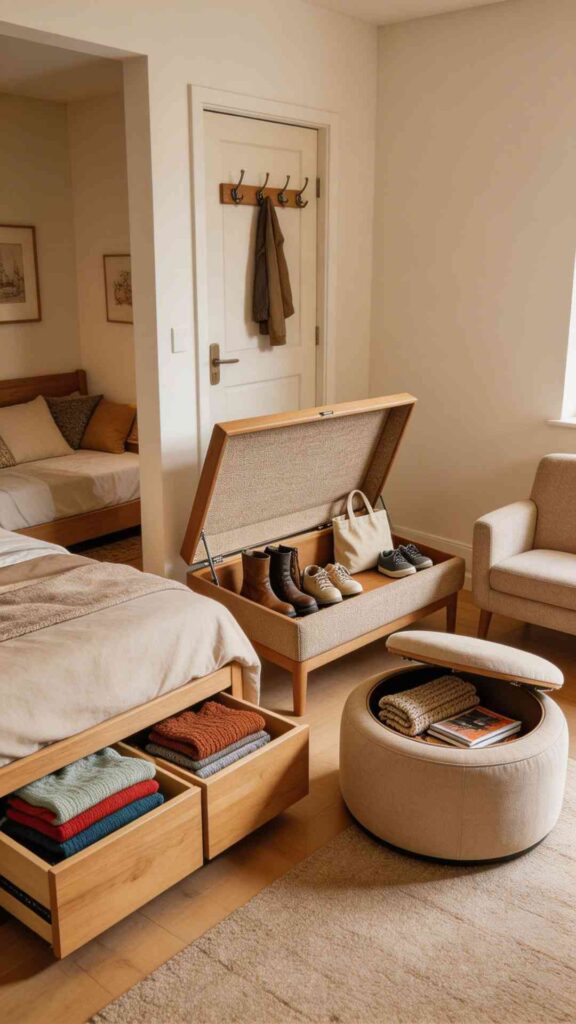
Storage does not always need to be visible. Many of the best tiny home living tips involve hiding storage in places you already use.
Beds with under storage drawers can hold seasonal clothing. Storage benches near the entryway can hide shoes and bags. Even hollow ottomans can store blankets or magazines.
When storage blends naturally into furniture, the home feels less cluttered while still staying highly functional. This balance is key when working with limited square footage.
10. Use Sliding or Pocket Doors
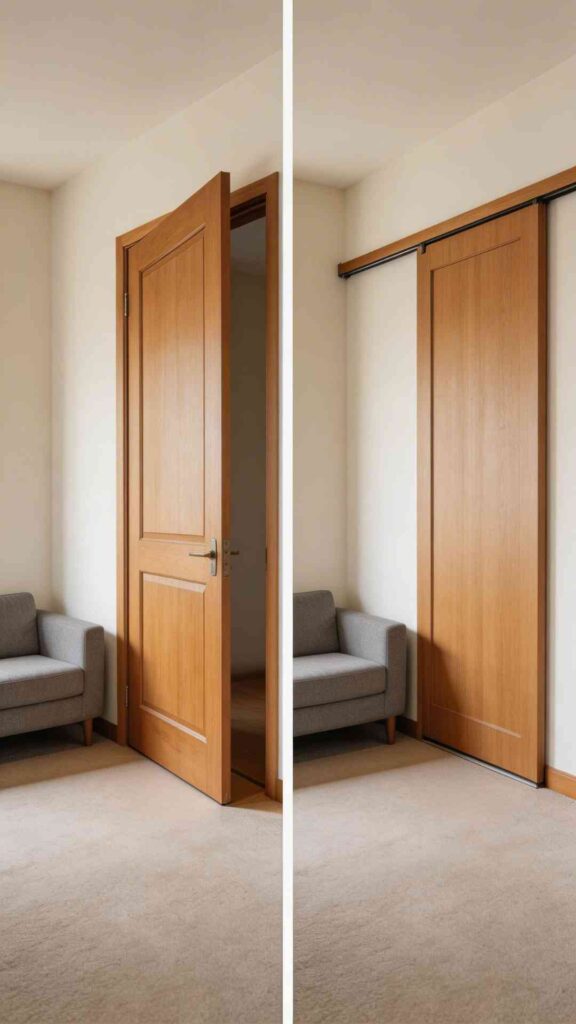
Traditional doors require space to swing open, which can reduce usable floor area. In smaller homes, sliding or pocket doors can help free up valuable room.
Sliding doors work particularly well for closets, bathrooms, or laundry areas. Because they move sideways rather than outward, they allow furniture to be placed closer to the wall.
This simple design adjustment can significantly improve how the space flows. It also contributes to smoother movement around the home.
11. Let Natural Light Travel Freely
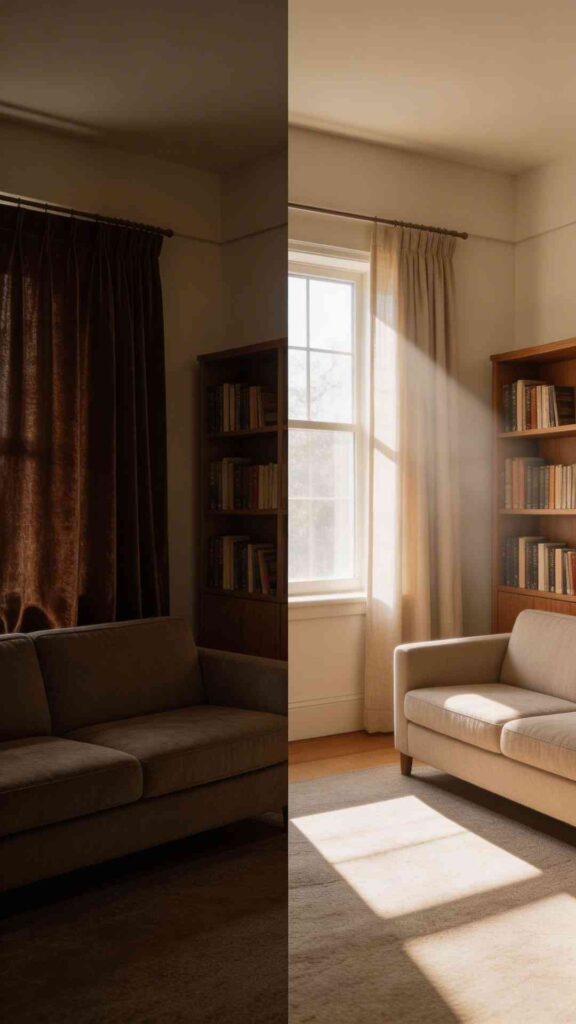
Natural light has an incredible effect on how spacious a home feels. Blocking windows with heavy curtains or tall furniture can make rooms appear smaller.
Instead, choose light linen curtains or simple blinds that allow daylight to filter through the room. Position furniture so that windows remain mostly open and unobstructed.
When light flows easily through the space, rooms instantly feel larger, fresher, and more comfortable.
12. Keep Decor Thoughtful and Personal
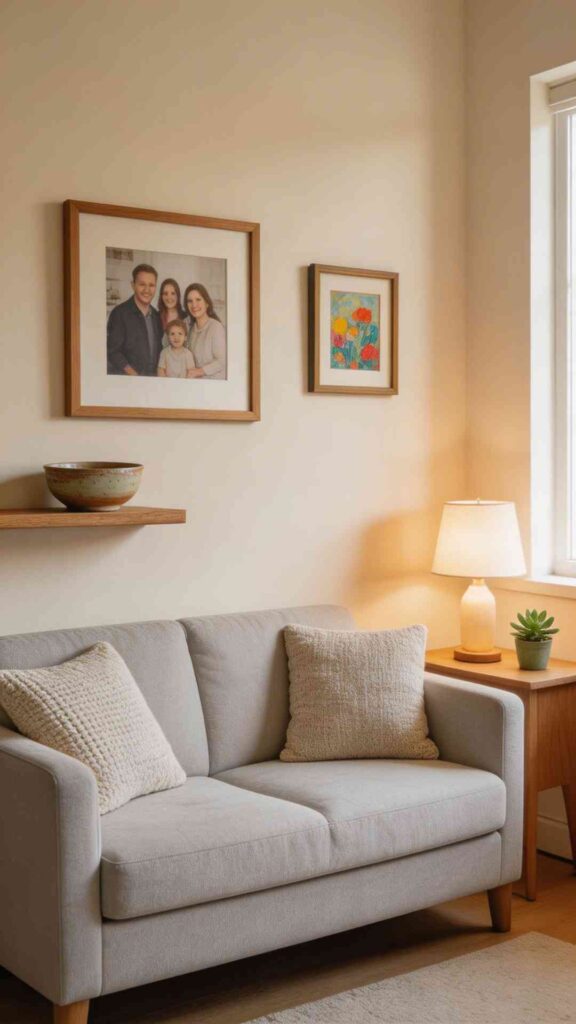
Decorating a small home does not mean removing personality. In fact, meaningful decor can make compact spaces feel warm and welcoming.
Instead of filling every wall, select a few pieces that truly matter to you. A framed photograph, a favorite artwork, or a handmade ceramic bowl can add character without overwhelming the room.
Thoughtful decoration supports the overall goal of small space living ideas, which is creating a home that feels both functional and personal.
13. Rotate Items Seasonally
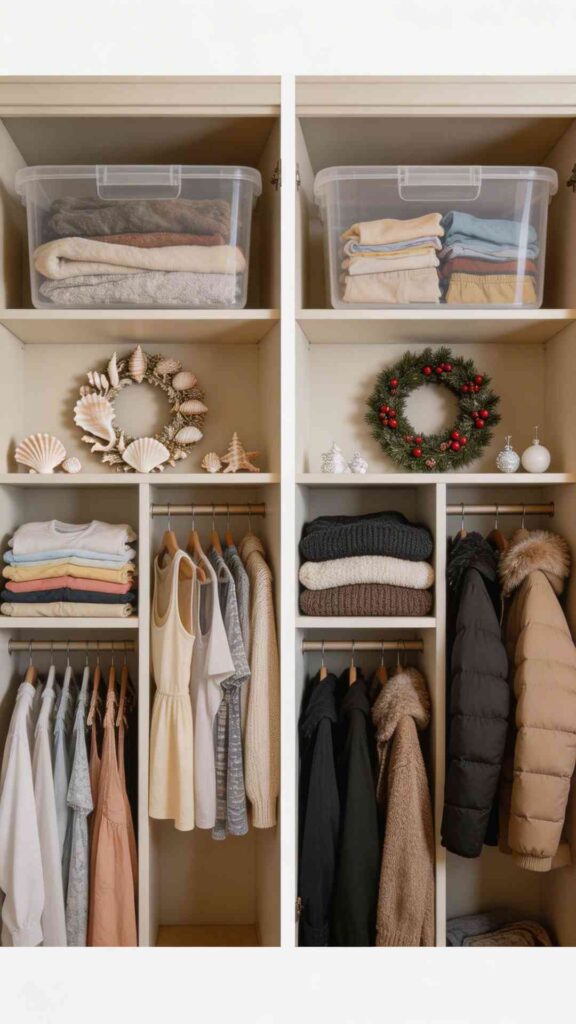
Another helpful approach for maximizing small spaces is rotating items throughout the year. Keeping everything accessible at all times can overwhelm limited storage.
For example, store winter blankets or heavy clothing during warmer months. Rotate decorative items or seasonal decor instead of displaying everything at once.
This simple habit keeps the home feeling fresh while maintaining better organization.
Also See: 15 Home Office Ideas to Create a Productive Workspace
14. Use Clear Containers for Organization
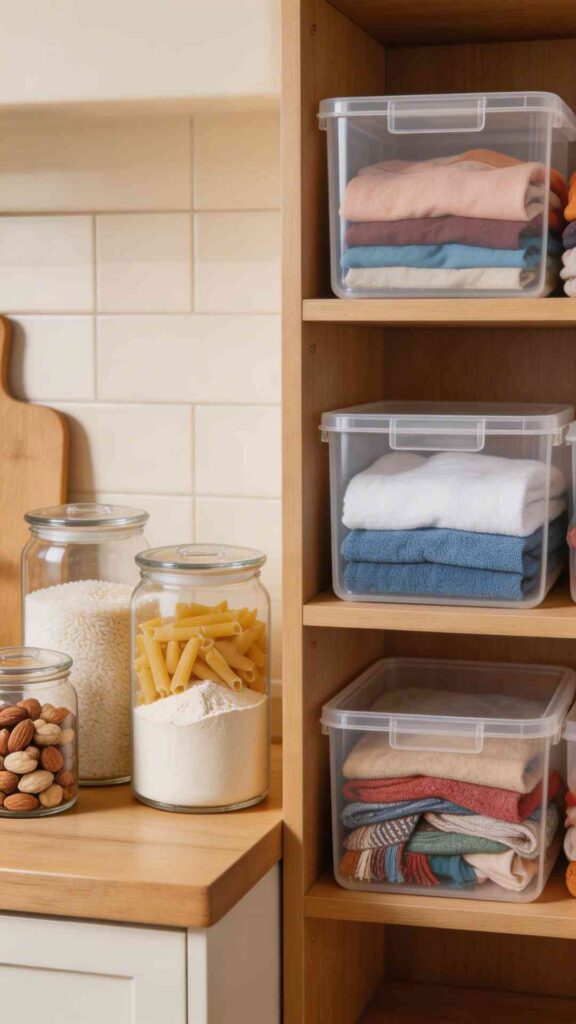
Transparent storage containers can make organization much easier in small homes. Because you can immediately see what is inside, you avoid unnecessary searching or duplicate purchases.
Clear glass jars work well in kitchens for dry ingredients. Transparent storage boxes are helpful in closets or cabinets.
This method encourages tidiness and helps keep storage areas simple and easy to maintain.
15. Think Before Bringing New Items Home
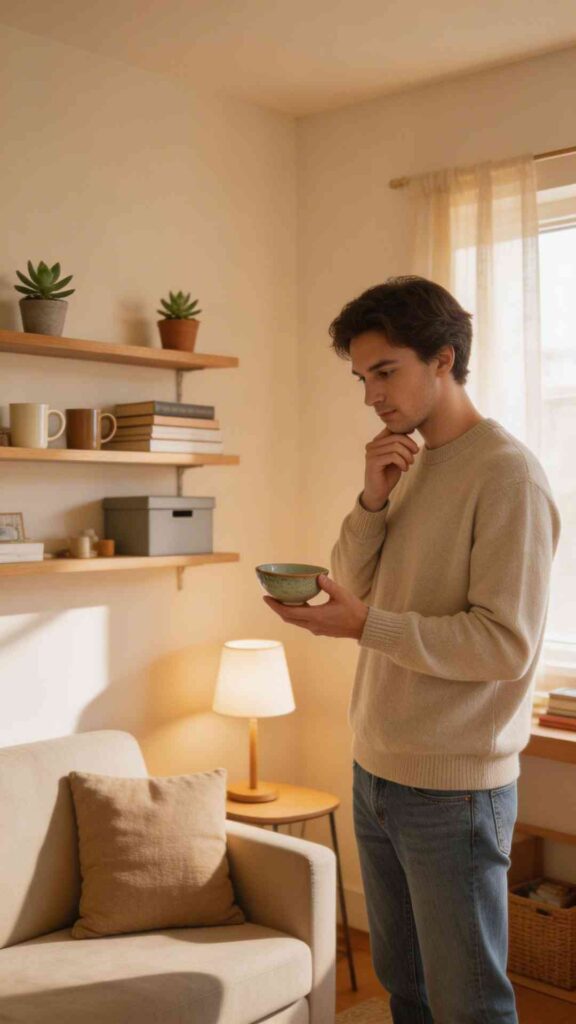
One final habit that supports all small home living ideas is mindful consumption. Before bringing a new item home, consider whether it truly adds value to your space.
Ask yourself if it solves a real need, fits comfortably in your home, and supports the calm environment you want to create.
Small homes work best when every object has a clear purpose. Being selective helps maintain balance and prevents clutter from slowly returning.
Conclusion
Living in a smaller home does not mean sacrificing comfort or style. With thoughtful planning and a few practical adjustments, even compact spaces can feel open, organized, and welcoming. The key is focusing on smart storage, simple design choices, and mindful habits that support daily life.
These small space living ideas show that creating a functional home is often about small improvements rather than big changes. When furniture serves multiple purposes, light flows freely, and clutter stays under control, a small home can feel calm and comfortable.
Start with one or two ideas that fit naturally into your space. Over time, these small changes will help you build a home that feels balanced, practical, and truly enjoyable to live in.