A child’s room has a way of collecting everything from tiny toys to school supplies, half finished crafts, and clothes that seem to multiply overnight. If you’ve ever stepped on a stray building block or searched for a missing shoe five minutes before leaving the house, you’re not alone.
Finding simple and practical kids room organization ideas can make everyday life feel a little calmer and more manageable. The goal is not to create a perfect space that always looks tidy, but to design a room that works for both you and your child.
With thoughtful storage and a few realistic habits, you can turn a busy space into one that feels welcoming, functional, and easy to maintain.
Table of Contents
Start with a Simple Decluttering Routine
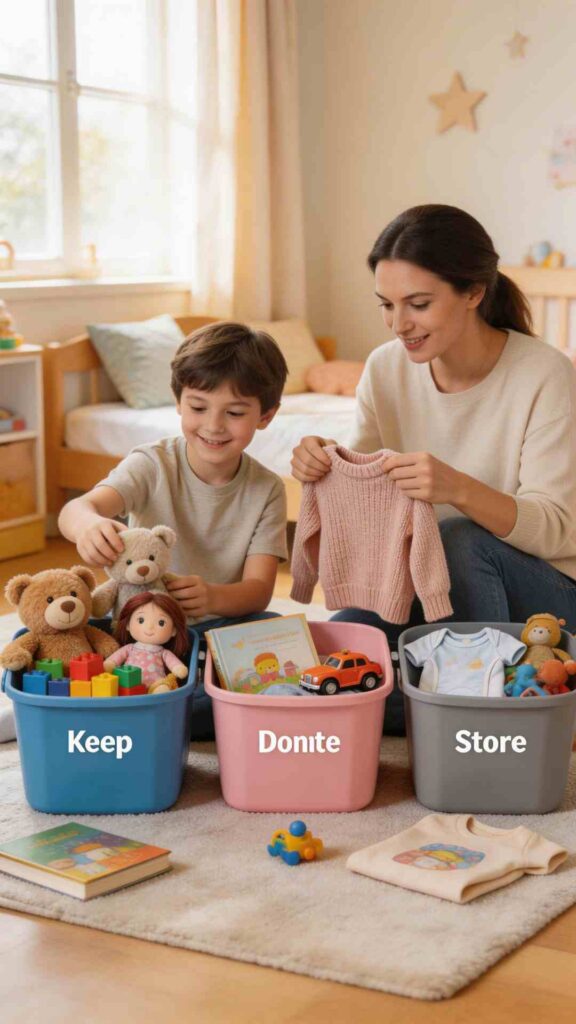
Before exploring storage solutions, it helps to take a step back and look at what is actually in the room. Kids outgrow toys, clothes, and books quickly, and keeping everything often leads to clutter rather than comfort.
Set aside time to sort items into three categories: keep, donate, and store. Involving your child in this process can make a big difference. It teaches them to value their belongings and understand why organizing kids room spaces matters.
Try to keep only what is used regularly or truly loved. A room with fewer items is easier to organize and maintain, and it also gives children more space to play and relax without feeling overwhelmed.
Use Low and Accessible Toy Storage Ideas
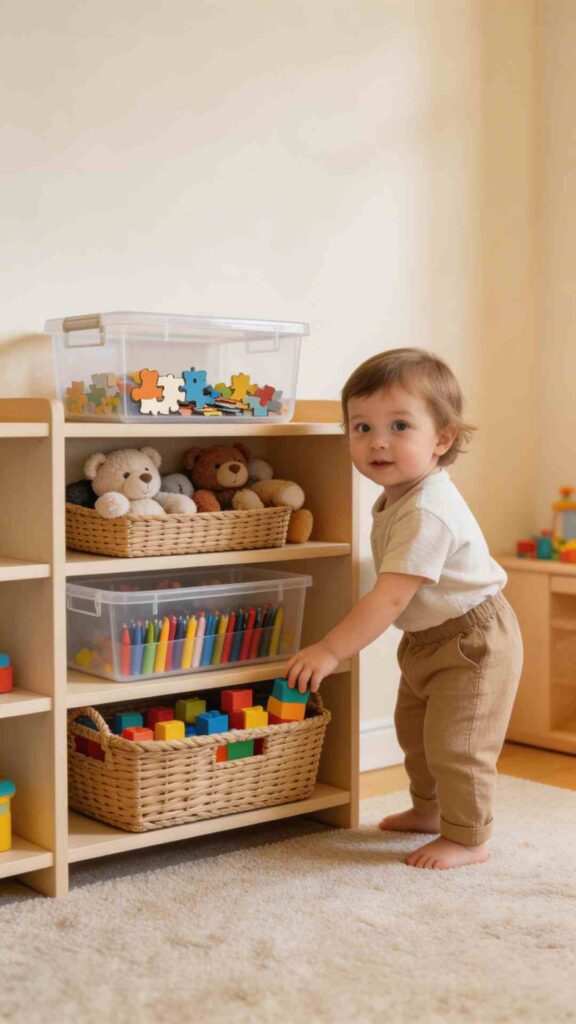
One of the most practical toy storage ideas is to keep everything within your child’s reach. When storage is easy to access, children are more likely to clean up after themselves.
Open bins, baskets, and low shelves work well because they allow kids to see what they have without digging through piles. Clear containers can also help, especially for smaller items like puzzles or art supplies.
Place frequently used toys at eye level and rotate others every few weeks. This keeps the room feeling fresh without adding more clutter. It also encourages kids to rediscover toys they may have forgotten about.
Create Zones for Better Kids Bedroom Organization
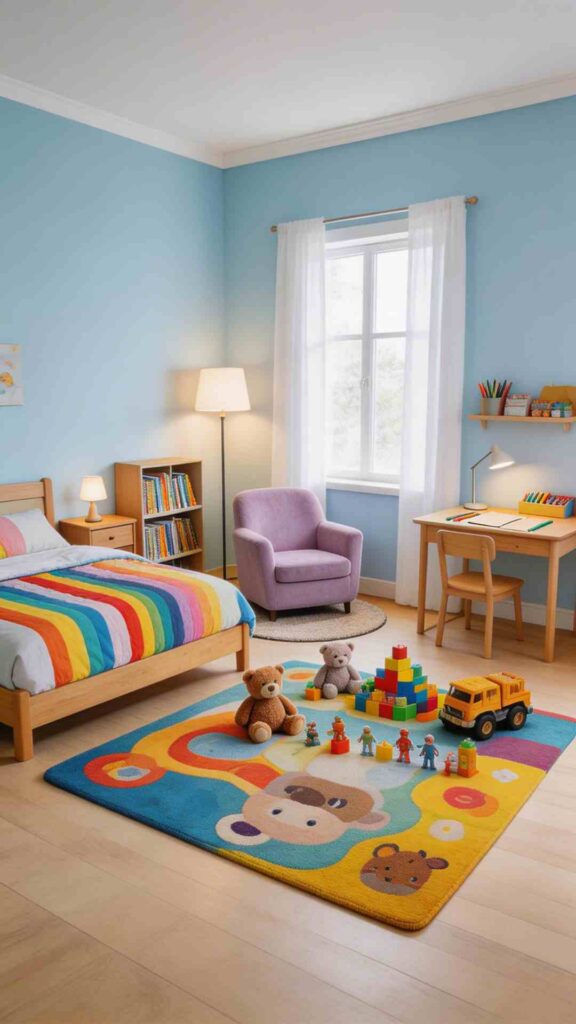
Dividing the room into simple zones can make a big difference in how it feels and functions. Think of the space as having small areas for specific activities like sleeping, playing, and studying.
A reading corner with a soft chair and a small bookshelf can encourage quiet time. A play area with a rug helps define where toys belong. Even a small desk or table can become a dedicated spot for homework or crafts.
This kind of kids bedroom organization helps children understand where things go. It also makes tidying up more intuitive because everything has a clear place.
Explore More:
- 10 Easy Home Organization Tips for Beginners (2026 Updated)
- Closet Organization Ideas to Double Your Storage Space Easily
- Best Studio Apartment Layout Ideas to Make Small Spaces Functional
Make the Most of Vertical Space
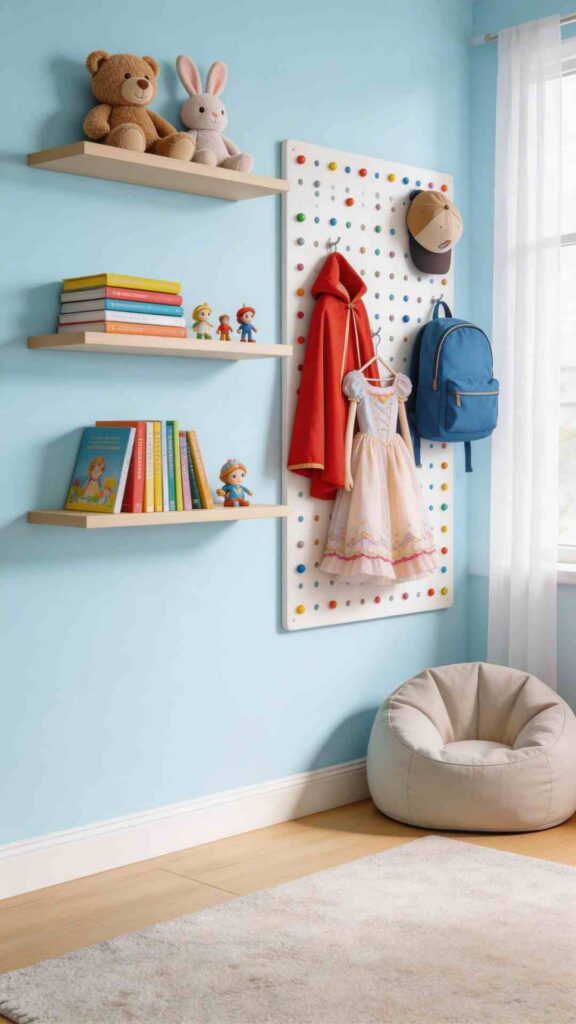
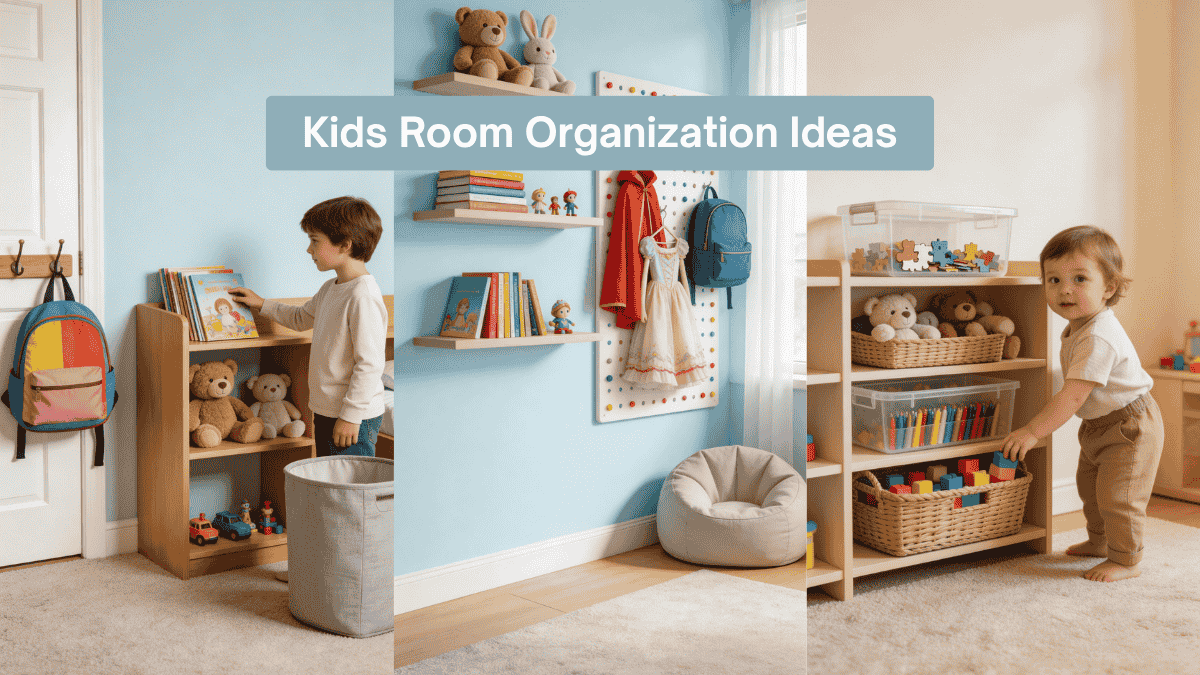
When floor space is limited, looking upward can open up new possibilities. Walls are often underused in children room storage ideas, yet they offer plenty of room for smart solutions.
Floating shelves can hold books and decorative items without taking up space below. Hooks on the wall can be used for bags, hats, or dress up clothes. Pegboards are another flexible option that can grow with your child’s needs.
By using vertical space, you keep the floor clearer and make the room feel more open. This approach works especially well in smaller bedrooms where every inch matters.
Choose Multi Functional Furniture
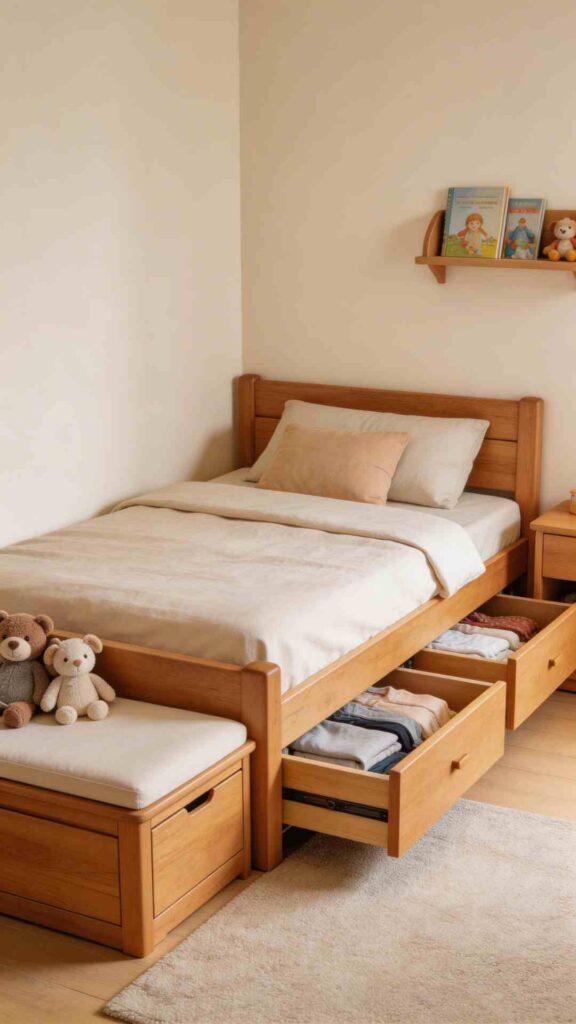
Furniture that serves more than one purpose can simplify organizing kids room layouts. A bed with built in drawers can store clothes or extra bedding. Storage benches can double as seating and toy storage.
Look for pieces that blend naturally into the room rather than adding bulk. For example, a simple wooden chest at the foot of the bed can hold toys while also acting as a place to sit.
This approach reduces the need for extra storage units and helps maintain a calm, uncluttered look that is easier to manage day to day.
Label Storage to Build Good Habits
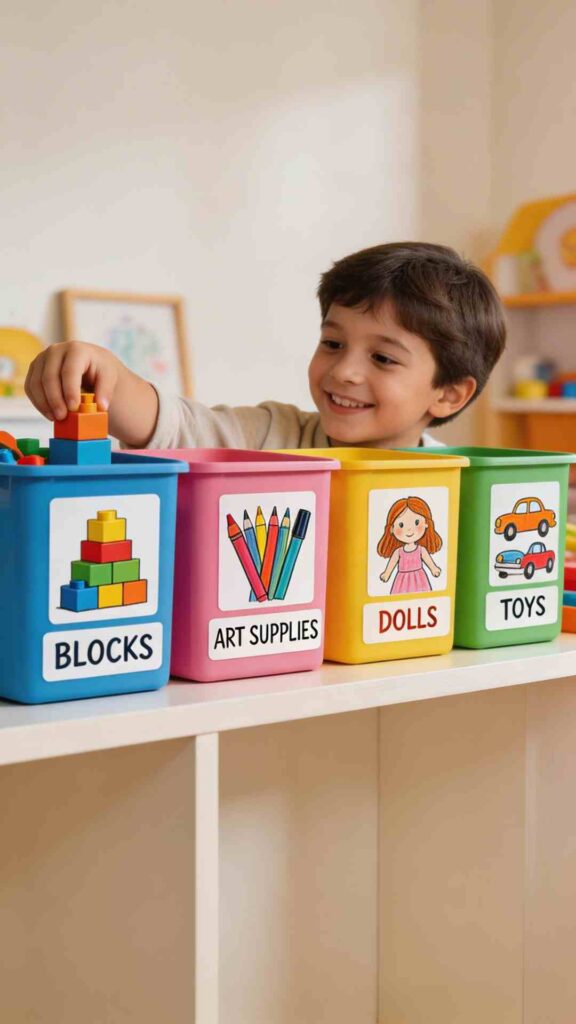
Labels might seem like a small detail, but they can make a big impact. When children know exactly where things belong, they are more likely to put them back after use.
You can use simple word labels for older children or picture labels for younger ones who are still learning to read. This works especially well for bins that hold similar items like blocks, art supplies, or dolls.
Over time, labeling supports independence and helps children take responsibility for their space. It turns cleanup into a simple routine rather than a daily struggle.
Rotate Toys Instead of Storing Everything at Once
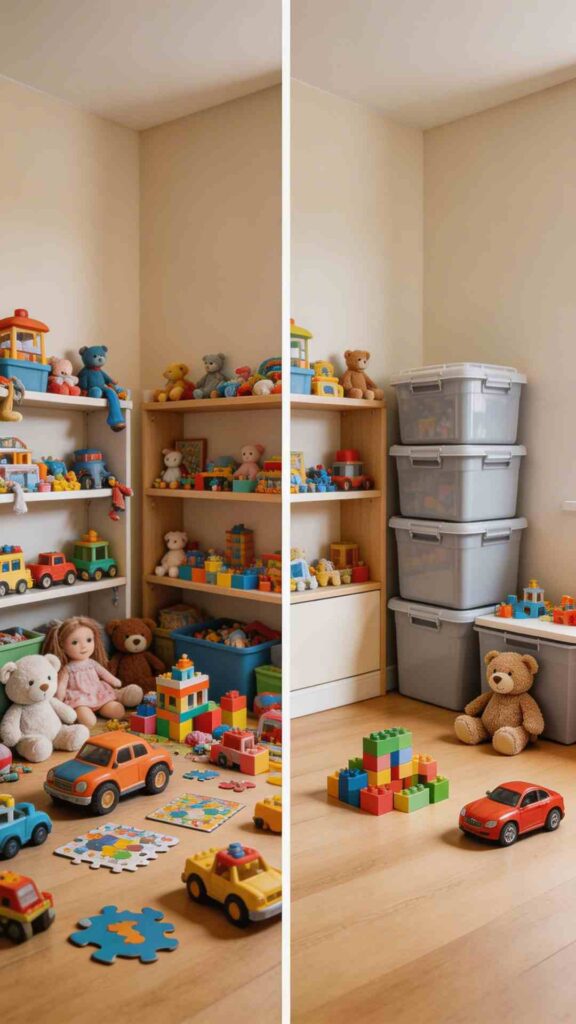
One common mistake in kids room organization ideas is trying to keep every toy available all the time. This often leads to clutter and makes it harder for children to focus on what they are playing with.
Instead, try a rotation system. Keep a portion of toys stored away and swap them out every few weeks. This keeps the room more manageable and makes old toys feel new again.
It also reduces decision fatigue for children. With fewer options, they tend to engage more deeply in their play rather than jumping quickly from one toy to another.
Keep Everyday Items Easy to Reach
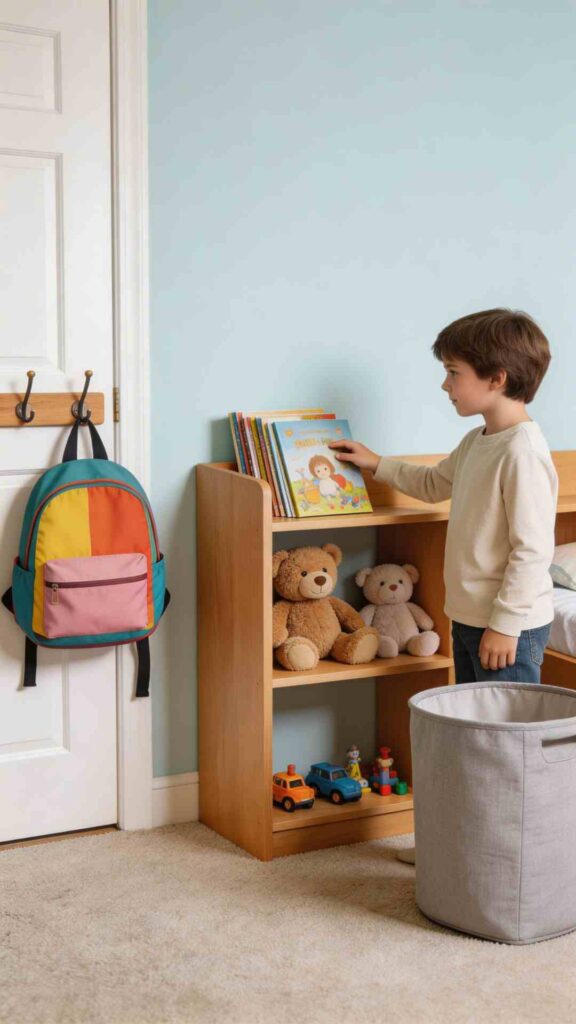
When organizing kids room spaces, think about what your child uses daily. Clothes, school bags, and favorite toys should be easy to access without help.
Place a small basket or hook near the door for backpacks. Keep a laundry bin within reach so clothes do not end up on the floor. Use open shelving for frequently used books or toys.
This approach makes daily routines smoother and encourages children to stay organized without constant reminders. It also helps build confidence as they learn to manage their own space.
Avoid Overcomplicating the System
It can be tempting to create a detailed organization system with many categories and containers. However, children usually do better with simple setups that are easy to follow.
Too many rules or complicated systems can make cleanup feel overwhelming. Instead, focus on broad categories like books, toys, and clothes.
A simple system is easier to maintain and more likely to stick over time. The goal is not perfection but consistency and ease.
Conclusion
Creating a well organized kids room is less about strict rules and more about finding a rhythm that works for your family. With thoughtful kids room organization ideas, you can design a space that supports play, rest, and everyday routines without constant stress.
Start small, focus on what your child actually needs, and keep things simple. Even a few small changes like adding accessible storage or creating clear zones can make a noticeable difference. Over time, these habits build a space that feels calm, functional, and truly lived in. With patience and a bit of creativity, organizing kids room spaces can become a manageable and even enjoyable part of daily life.