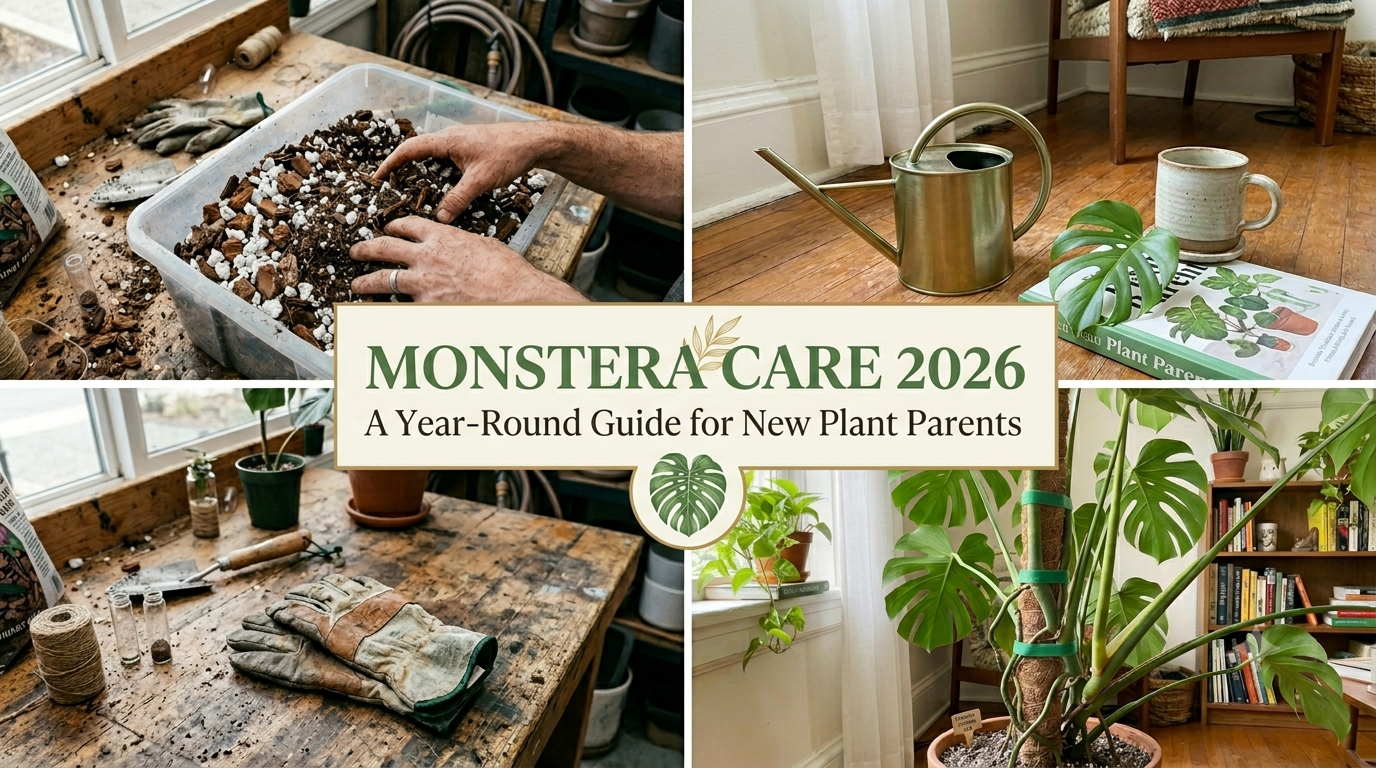
Cultivating a commanding Monstera deliciosa that produces massive split foliage requires moving past basic watering schedules. In my indoor horticulture research, I frequently see plant owners struggle with stunted growth, yellowing leaves, or a total lack of natural fenestrations. These issues are rarely caused by a lack of care; instead, they stem from a mismatch between the home’s macro-environment and the plant’s native rainforest ecology.
To engineer a thriving, showroom-quality Monstera in a standard apartment or residential space, you must systematically manage light intensity, potting soil porosity, and structural support. This technical blueprint outlines the exact data points and cultural practices required to maximize leaf size and maintain systemic root health.
The Monstera Environmental Optimization Blueprint
Before looking at daily maintenance, ensure your space satisfies these baseline technical parameters:
| Environmental Metric | Optimal Operational Target | Testing Methodology |
|---|---|---|
| Light Intensity | 200 to 400 foot-candles (Bright, Indirect) | Digital light meter or smartphone app check |
| Substrate Composition | 40% Potting Soil, 30% Orchid Bark, 30% Perlite | Visual mix ratio check (chunky texture) |
| Ambient Humidity | 55% to 65% Relative Humidity (RH) | Digital hygrometer monitoring |
| Moisture Threshold | Top 2.0 inches completely dry (0% moisture) | Manual finger test or digital moisture probe |
1. Light Dynamics: The Key to Split Fenestrations
Bright, indirect light is the metabolic engine behind massive leaf development. Without sufficient photon energy, a Monstera will produce small, solid leaves (juvenile forms) and exhibit leggy, phototropic stretching as it searches for a source.
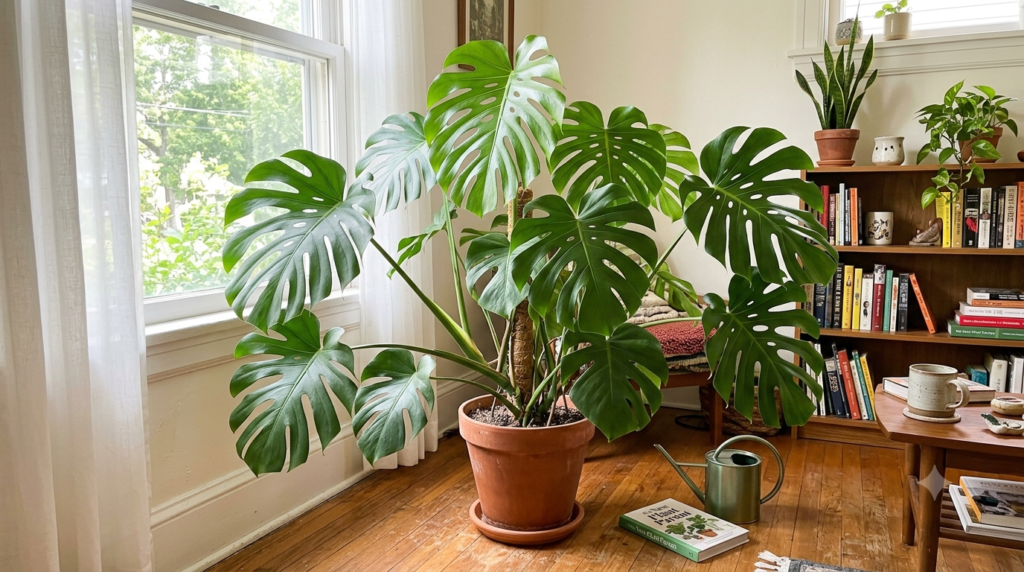
In our indoor testing, placing a Monstera directly next to an unfiltered south or west-facing window causes rapid chlorophyll degradation and localized leaf scorching. Conversely, deep corners provide less than 50 foot-candles of light, which stalls growth entirely. Position your plant 2 to 4 feet away from a primary window, or drape a sheer curtain across the glass to diffuse harsh rays. If your indoor space lacks functional windows, supplement with a 30-watt LED grow light running on a strict 12-hour timer.
2. Watering Frameworks vs. Root Rot Prevention
More indoor Monsteras die from anaerobic root rot than from dehydration. When soil stays continuously saturated, oxygen is completely squeezed out of the substrate, causing the aerial and subterranean root structures to decay.
Never water your plant on a strict calendar schedule. Instead, follow a diagnostic moisture checklist:
- The Physical Probe: Insert your finger or a clean wooden chopstick 2 inches deep into the soil. If any soil particles stick or feel cool, delay watering.
- The Weight Check: Familiarize yourself with the weight of the nursery pot when dry vs. when completely saturated. Saturated pots are significantly heavier; if the pot feels heavy, the core root ball is still holding water.
- The Flushing Method: When watering, pour slowly over the entire surface until water flows freely out of the bottom drainage holes. This flushes out accumulated fertilizer salts. Always empty the drainage saucer within 15 minutes to prevent water re-absorption.
3. Substrate Engineering: Designing a High-Porosity Mix
Standard commercial potting soils are too dense for tropical aroids. They retain water for too long and suffocate the thick, fleshy roots of a Monstera. To mimic the loose, organic debris of a rainforest floor, you must mix a custom, chunky medium.
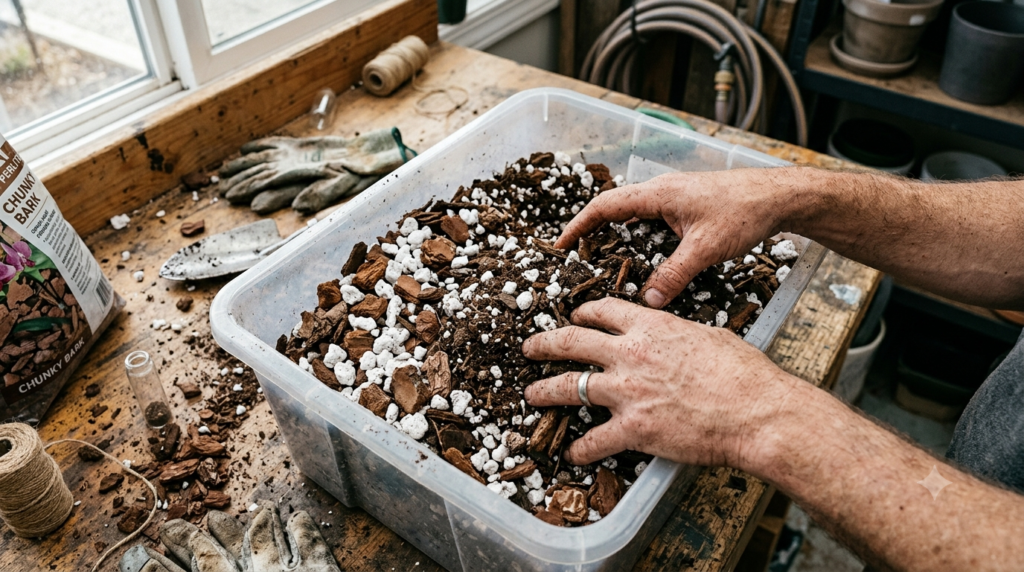
Our Proven Potting Mix Formula:
- 4 Parts Quality Organic Potting Soil: Provides a stable nutrient baseline.
- 3 Parts Coarse Orchid Bark: Creates large structural air pockets for root respiration.
- 3 Parts Horticultural Perlite: Speeds up drainage and prevents compaction.
When repotting—which should occur every 24 months during the spring—select a container that is only 1 to 2 inches larger in diameter than the existing root ball. Moving a plant into an oversized pot creates a “perched water table” where excess soil holds more water than the roots can drink, creating a prime environment for root rot.
4. Nutritional Management for Accelerated Leaf Growth
Monstera leaves require consistent nitrogen and potassium levels to expand their cell walls and develop structural splits. During the active growing period (April through September), feed your plant every 4 weeks with a balanced, water-soluble fertilizer diluted to half-strength.
Stop all fertilizer applications during the winter months. Forcing growth during low-light periods results in weak, structurally compromised stems that cannot support the weight of future leaves.
5. Structural Engineering: Integrating a Moss Pole
In their native habitats, Monsteras are climbing epiphytes that use thick aerial roots to anchor themselves up rainforest tree trunks. If left unsupported in a home layout, the plant will trail horizontally, and leaf size will gradually shrink because the plant does not feel structurally secure.
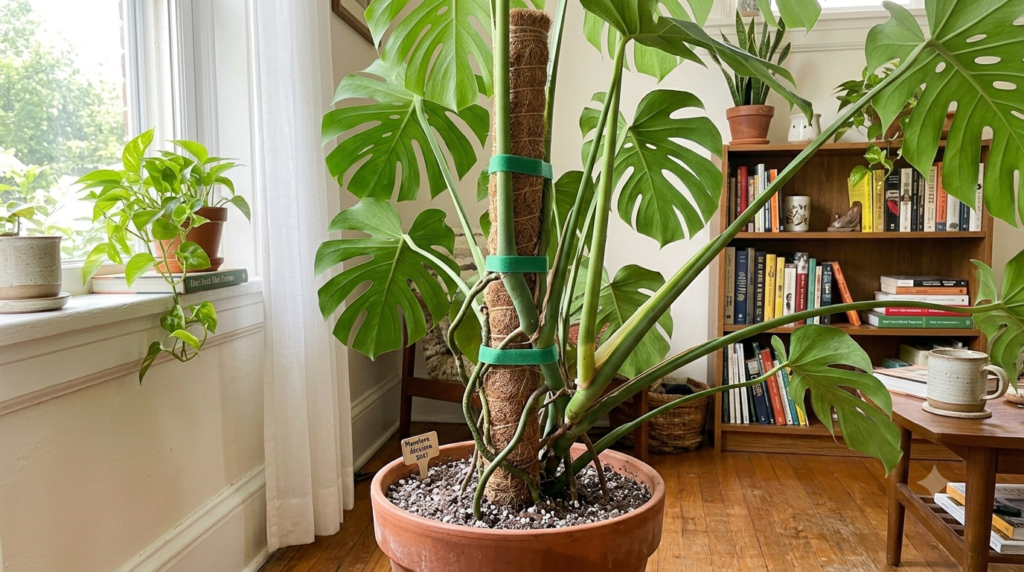
To fix this, install a sturdy moss pole or coco coir totem right behind the main stem during your next repotting cycle. Secure the thick nodes loosely to the pole using soft plant tape. As the aerial roots grow into the moist moss column, they signal to the plant that it has reached a secure anchor point, triggering the production of exponentially larger, deeply fenestrated leaves.
Troubleshooting Common Structural Failures
- Symptom: Yellowing Lower Leaves: This is a classic sign of persistent overwatering. Immediately halt watering, inspect the root system for dark, mushy tissue, and adjust your substrate drainage profile.
- Symptom: Crispy Brown Leaf Tips: This indicates low ambient humidity or localized chemical burns from tap water minerals. Shift your plant away from dry heating vents, group it with other plants to raise local humidity, and switch to filtered or distilled water.
- Symptom: Fine Webbing (Spider Mites): Pests thrive in stagnant, dry indoor air. Spray the entire plant with a diluted neem oil solution or insecticidal soap, paying close attention to the underside of leaf joints.
Frequently Asked Questions
How do I encourage more splits (fenestrations) on my Monstera?
Fenestrations are a product of plant maturity and high light values. Ensure your plant is getting at least 6 hours of bright, indirect light daily and is secured to a vertical support pole.
Should I cut off the long brown aerial roots?
Do not cut them off unless they are dry and dead. These roots help the plant absorb ambient moisture and provide structural balance. You can gently tuck them back down directly into the potting soil.
Can a Monstera survive in a windowless room?
No. A Monstera will gradually decline and rot in a windowless room unless you install a high-output, full-spectrum LED grow light positioned 18 to 24 inches above the canopy.
Technical Conclusion
Achieving a healthy, statement-piece Monstera relies on matching your home environment with basic tropical biology. By swapping out generic potting soil for a high-porosity chunky mix, maximizing bright indirect light exposure, and providing a stable vertical climbing support, you eliminate the common stresses that stunt these indoor giants. Monitor your substrate moisture levels closely, react quickly to early environmental warnings, and allow your plant’s natural growth cycle to unfold systematically.